Multi-producer / single-consumer dirty-set of channel ids, with CV-style blocking drain semantics. More...
#include <Utils.h>
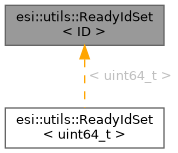
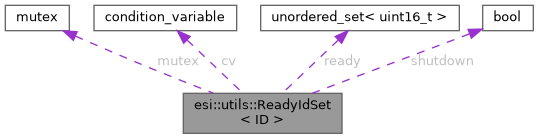
Public Member Functions | |
| void | markReady (ID id) |
| Add id to the dirty set and wake the consumer (if any). | |
| bool | waitDrain (std::unordered_set< ID > &out, std::optional< std::chrono::milliseconds > backoff={}) |
| Block until either requestShutdown() is called or the set is non-empty, then atomically swap the current set into out. | |
| void | requestShutdown () |
| Signal a clean shutdown: wakes every current and future waitDrain caller, which will then observe false. | |
| bool | isShutdown () const |
| True once requestShutdown() has been called. | |
Private Attributes | |
| std::mutex | mutex |
| std::condition_variable | cv |
| std::unordered_set< ID > | ready |
| bool | shutdown = false |
Detailed Description
class esi::utils::ReadyIdSet< ID >
Multi-producer / single-consumer dirty-set of channel ids, with CV-style blocking drain semantics.
Producers call markReady(id); the consumer thread calls waitDrain() to atomically swap out the current set.
Use this when many independent per-channel producers feed a single transport thread that needs to know which channels have work to do without polling each in turn. The CV pattern (lock-around-shutdown-set, notify-after-release, predicate captures both shutdown and !empty) is fiddly enough that centralising it here avoids subtle copy/paste bugs in each backend.
Member Function Documentation
◆ isShutdown()
|
inline |
True once requestShutdown() has been called.
◆ markReady()
|
inline |
◆ requestShutdown()
|
inline |
◆ waitDrain()
|
inline |
Block until either requestShutdown() is called or the set is non-empty, then atomically swap the current set into out.
With backoff non-nullopt, returns after the timeout even if neither condition holds (useful when the caller maintains its own retry set it wants to re-process periodically). Returns false once shutdown has been signalled, so consumer loops can write while (set.waitDrain(ids, backoff)) { ... }.
Member Data Documentation
◆ cv
|
private |
Definition at line 226 of file Utils.h.
Referenced by markReady(), and requestShutdown().
◆ mutex
|
mutableprivate |
Definition at line 225 of file Utils.h.
Referenced by isShutdown(), markReady(), and requestShutdown().
◆ ready
|
private |
Definition at line 227 of file Utils.h.
Referenced by markReady().
◆ shutdown
|
private |
Definition at line 228 of file Utils.h.
Referenced by isShutdown(), and requestShutdown().
The documentation for this class was generated from the following file:
- /home/runner/work/circt-www/circt-www/circt_src/lib/Dialect/ESI/runtime/cpp/include/esi/Utils.h
Generated on for CIRCT by
 1.15.0